







Dear parents and carers
An aspect of the contemporary social fabric is the idea that we can all construct our own identity - that we can be whoever or whatever we choose. As the teenage years are those of exploration of life choices, many mimic what they see. The media are powerful in this regard. Some adolescents take their cues from models, musicians or sports stars. These images are often vacuous and ephemeral. They can be image-based and impressionistic without real substance or anchors. At times, adolescents who feel they are fiercely asserting their individuality, are in fact conforming to their tribe. The era of the Goths is an example. Others take their stance on the various ‘isms’ such as Marxism. This can be nothing more than a teenage phase. In one of the elite schools in which I worked, a Year 11 student told me he was an anarchist and insisted that “Property is theft”. I decided he was anything but; he was doing rather well out of capitalism! Perhaps the main current influencers are those who represent toxic masculinity, either by design or behaviour or both. Too often this includes sexual and physical assaults and emotional abuse. One reason why teenagers emulate notable figures is that in our culture we lack honourable rites of passage to successfully usher them into adulthood.
Our firm mooring - Jesus
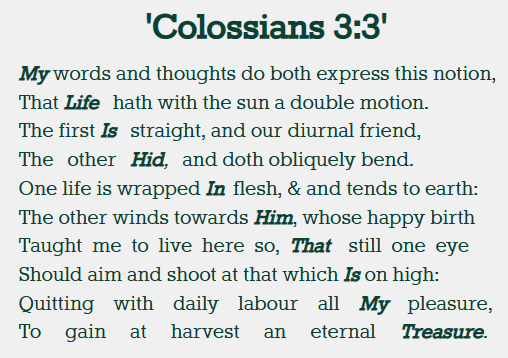
On the Christians’ identity, the Bible is very clear. The Apostle Paul writes in Colossians, “Your life is now hidden with Christ in God” (Colossians 3:3). This is profound. It provides a firm mooring and a sense of self in relation to others and the whole of God’s cosmos. Paul goes on to say, “When Christ, who is your life appears, then you will also appear with him in glory”.
The 17th century English clergyman and poet, George Herbert, put this beautifully, such that his poetry is meant to be read both horizontally and diagonally.
Ushering young people to maturity
Christian people can rest assured their identity is in Christ. There is great reassurance and confidence in this. It is incumbent upon parents and teachers to develop acceptable and hopefully godly ways to usher young people into maturity, and preferably, maturity in Christ. A good conversation for parents to have with their children aged 16-18 is just how this transition to healthy, vibrant and effective adulthood will be managed. The answer will be unique to each family.
Dr John Collier
Interim Principal