The Anxious Generation is the title of the very influential 2024 book by an American Professor of Sociology and Leadership, Jonathan Haidt. It follows the seminal work of another American, a Professor of Psychology, Jean Twenge, The Narcissism Epidemic (2015). Both books lament the decline of a play-based childhood and the commencement of a phone-based childhood. Importantly, they date the beginning epidemic of health issues in children across the Western world to the advent of the iPhone in 2007. Their claim is that this has intersected with increasing parental anxiety about their children. In short, they say parents have over-protected children in the real world, where they need to experience the physical and mental bumps and grazes necessary in order to become resilient and successfully navigate the buffeting which is part of life.
Under-protection in the online world
At the same time, parents, as a generalisation, have not protected young people against the toxic cauldron of the online world. The outcomes have included the vulnerability of girls to social competition, invidious comparisons and online shame and exclusion. Boys, they claim, have disengaged from the world of real adventure and withdrawn into video gaming and pornography. In 2021, American health authorities declared a state of national emergency in teenage mental health. Dr Twenge found rates of major depressive disorder in the 12-17 year old age group have increased by more than 50% in just 12 years. Australian health authorities claim that 39% of Australian young people up to the age of 24 have experienced a major mental health disorder serious enough to last 12 months. Retreating to the virtual world can lead to a sense of isolation and loneliness. Indeed, some governments overseas have taken the extraordinary step of appointing a Minister for Loneliness.
The danger of phones in the bedroom
Teens with the phone beside their bed have, according to various studies, been found to check emails and messages through the night. This is FOMO (Fear Of Missing Out). Sleep disturbance, or sleep deprivation can fuel anxiety and depression. Phones, says Professor of Sociology, Professor Sherry Turkle, take young people ‘forever elsewhere’, away from people and their surroundings, subject to toxic influencers and without the three-dimensional friendship of real people. This can sink them through algorithms into a false and dangerous world of ‘alternative facts’ in which some can be radicalised. Recent research indicates device addiction actually rewires the brain, leading to dopamine releases that create new reward centres and help establish addiction.
One of the issues which confronts young people who so isolate themselves is their sense of identity. Who am I really? Do I matter? Am I alone in a mechanistic, impersonal universe that doesn’t really care? Is there any meaning and significance in my life or indeed in the cosmos?
Christ our anchor
Although the context and social circumstances were different, the Apostle Paul speaks into these existential questions. He says, “for you died (Christian people have died to their old life) and your life is now hidden with Christ in God” (Colossians 3:3). This is a profound statement. Christians find meaning, sense, identity and security in Christ. Paul also says “do not be anxious about anything, but in every situation, by prayer and petition, with thanksgiving, present your requests to God. And the peace of God, which transcends all understanding, will guard your hearts and your minds in Christ Jesus.” (Philippians 4:6-7). The image here is of the Roman soldier standing guard outside. I am not suggesting that faith resolves all problems. What I am saying is that Christian faith provides an anchor which enables meaning, purpose, and grounding to be found in Jesus. This is huge help but not a panacea. The circumstances of life are anxiety producing!
Sound the alarm
I for one welcome the Federal Government’s first in the world legislation to keep young people away from social media until their 16th birthday. I also realise that some young people will find ways around the guardrails.
Haidt, Twenge and Turkle sound the alarm to parents. They would want you to supervise your children’s online behaviour and limit it. An American report in 2022 found that 46% of American youth were online almost constantly. These are the very ones who in many cases have been driven indoors by parents afraid of physical risks in the world outside their home. Molly-coddled kids, Haidt says, become insecure. By university years they require trigger warnings against any difficult ideas. This finds best expression in his 2018 best seller The Coddling of the American Mind.
Parents, please exert your God-given authority to supervise your child’s online exposure. It may be that there is more danger inside your home, via unfettered and unmitigated devices than there is in the physical world outside.
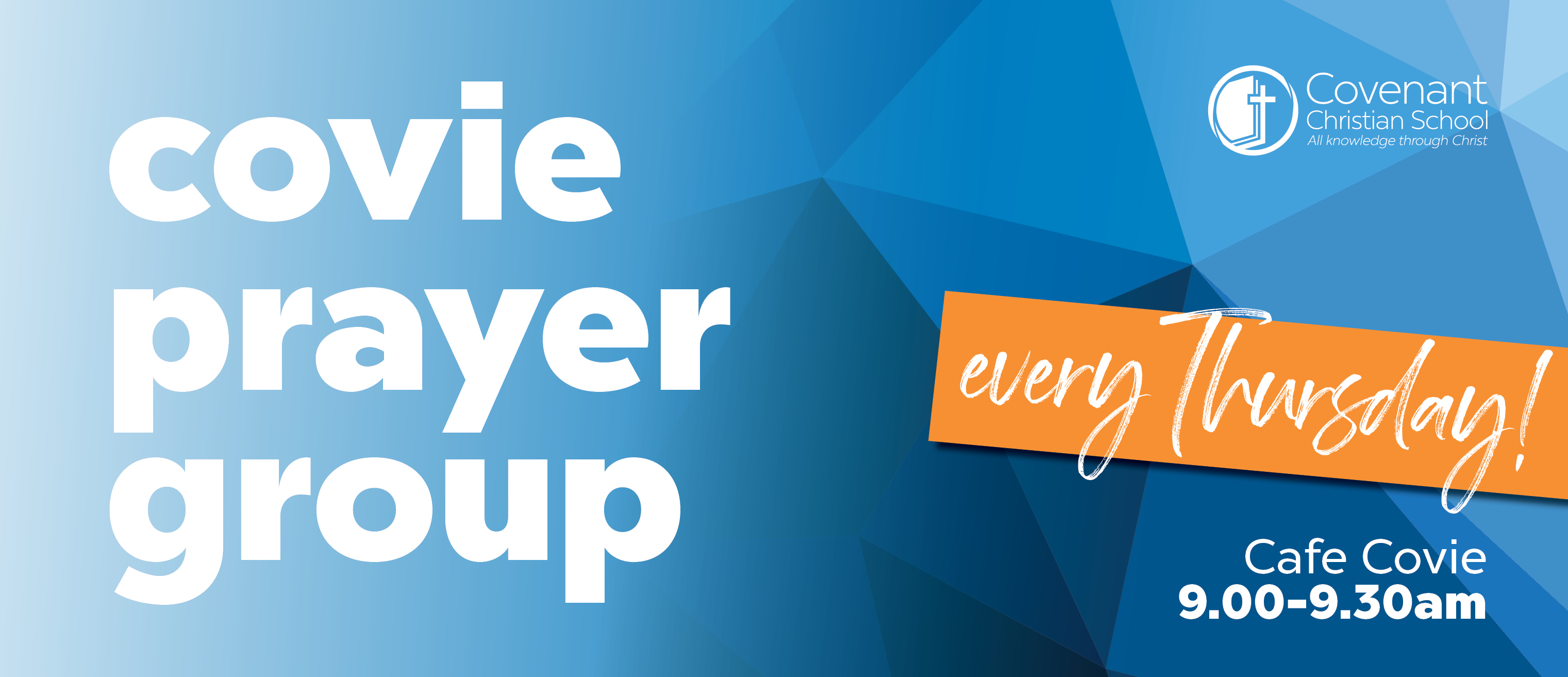
It is a blessing to pray together as a school community! Our Prayer Group warmly invites you to join them in prayer every Thursday during term time, from 9.00-9.30am in Cafe Covie.
Each week in the Covie Weekly, our Prayer Group provides a passage of Scripture for us to meditate on and some prayer suggestions for the week ahead. These can all be found here.
Australia's #1 kids Christian artist, Colin Buchanan, is coming to Covenant in the April school holidays. Sing, dance, laugh as kids, parents and grandparents join together for the unforgettable musical, messy mayhem of Colin's Favourites Live in Concert!
Uniform Update: Supporting Students in the Small Things
At Covenant, wearing the uniform well is one of the small daily habits that helps shape our students’ readiness for learning. Attention to uniform is often a window into attention to academics; when students practise consistency and care in the little things, it strengthens their approach to the bigger expectations of school life.
To help students meet uniform requirements quickly and minimise disruption, we are making a small adjustment to our practice. If a student arrives with one of a few easily replaced items incorrect - socks, ties, stockings, or earrings (replaced with keepers) - we will provide the correct item straight away.
Please note that this applies only to these small items, not to larger uniform pieces such as blazers or jackets. The cost of the replacement item will be added to school fees, and parents will receive notification.
This updated process will begin on Monday of Week 8.
Thank you for your ongoing partnership as we encourage habits that support both character and learning.
Dates for your diary: Year 10 and Year 7 Vaccinations
Monday 16 March | Year 10 vaccinations for meningococcal.
Friday 18 September | Year 7 vaccinations for HPV and dTpa.
Please read the School Vaccination Program It will guide you through the process of giving consent for your child’s vaccination.